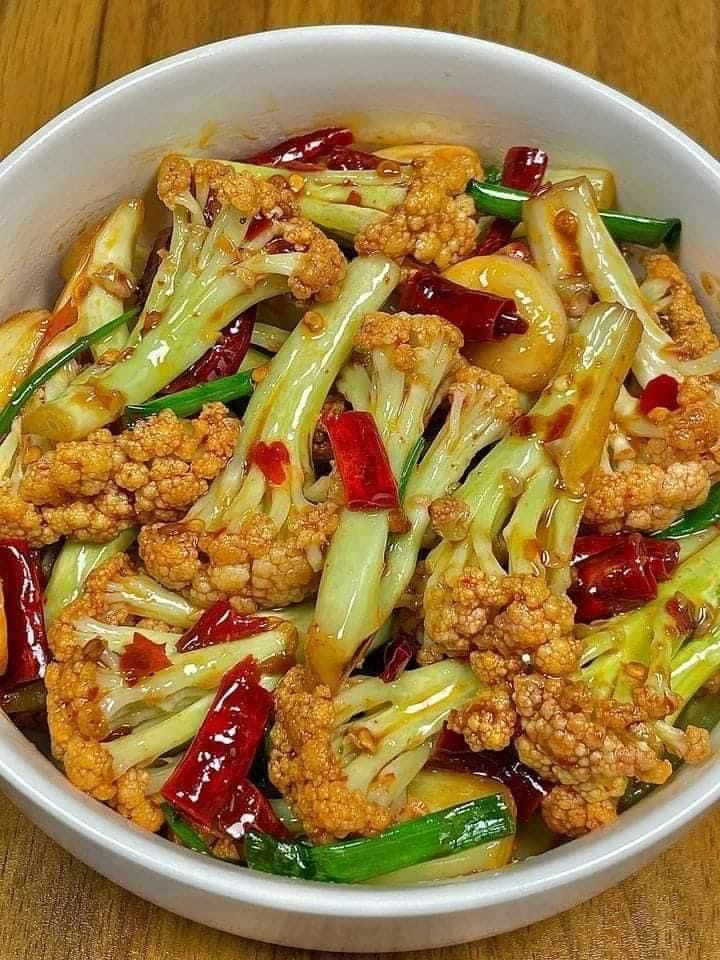
Servings: 4
Estimated WW Points: 1 Point per serving
Exact Points can vary depending on the soy sauce, chili paste, and sesame oil brands you use.
Ingredients
- 1 large head cauliflower, cut into medium florets
- 6–8 dried red chilies, cut into pieces
- 4 green onions, cut into 2-inch pieces
- 3 cloves garlic, minced
- 1 tsp fresh ginger, grated
- 1 tsp sesame oil
- Nonstick cooking spray
- 1 tsp sesame seeds, optional
For the Spicy Sauce
- 3 tbsp reduced-sodium soy sauce
- 2 tbsp rice vinegar
- 1 tbsp zero-calorie brown sugar substitute
- 1 tbsp chili garlic sauce
- ½ cup reduced-sodium vegetable or chicken broth
- 1 tsp cornstarch
- ½ tsp garlic powder
- ¼ tsp crushed red pepper flakes, optional
Instructions
- Bring a large pot of water to a boil and add the cauliflower florets.
- Cook for only 2–3 minutes, then immediately drain. The cauliflower should still be fairly firm.
- Heat a large wok or skillet over medium-high heat and coat generously with nonstick cooking spray.
- Add the cauliflower and cook for 5–6 minutes, stirring only occasionally so the florets develop some browned edges.
- Add the dried red chilies, garlic, and ginger and stir-fry for about 30–60 seconds.
- In a small bowl, whisk together the soy sauce, rice vinegar, brown sugar substitute, chili garlic sauce, broth, cornstarch, and garlic powder.
- Pour the sauce into the skillet and toss everything together.
- Cook for another 2–3 minutes, until the sauce becomes thick and glossy and coats the cauliflower.
- Stir in the green onions and sesame oil during the final minute.
- Sprinkle with sesame seeds if using and serve immediately.
Nutrition Facts
Per serving, approximately:
- Calories: 85
- Protein: 4g
- Carbohydrates: 13g
- Fat: 2g
- Saturated Fat: 0.3g
- Fiber: 5g
- Sugar: 5g
- Sodium: 480mg
Estimated WW Points: 1 per serving
The biggest thing with this one is not cooking the cauliflower until it’s completely soft before it hits the skillet. I only blanch it for a couple of minutes and let the wok finish the job. That keeps the stems firm, gives the edges time to brown, and stops the whole dish from turning watery once the sauce goes in.